Restoration archive
Selected work
A carved medallion, a bentwood rocking horse, a chair worn through at the seat. Look closely at four examples from Seat Renewal’s photo archive and the choices each weave calls for.
Double-blind caning
The medallion panel
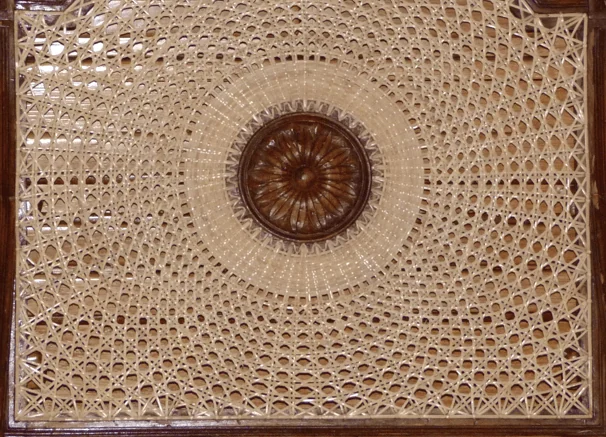
At the center of the panel, a carved wooden rosette interrupts the grid. The cane follows its circular edge, then opens back into the field of small, eight-sided holes. The closest weaving sits right against the carving, where a straight run would hide its outline.
Seat and back renewal
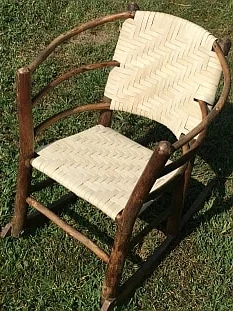
The bentwood armchair
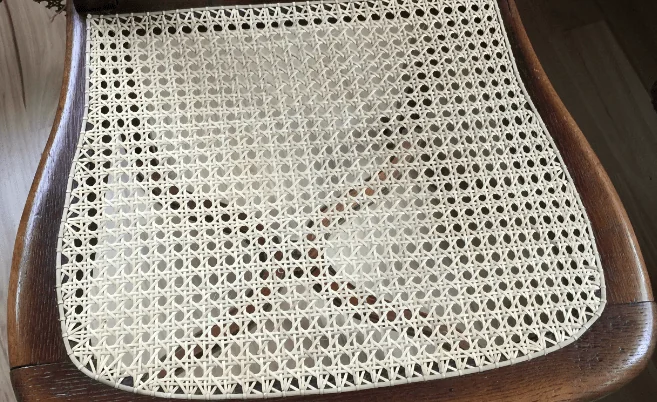
The original seat had opened up between the rails, and the back had lost much of its weave. With both panels renewed, the light-colored strands pick out the curve of the arms. Look at the new seat just below the back rail to see the diagonal pattern.
Woven saddle
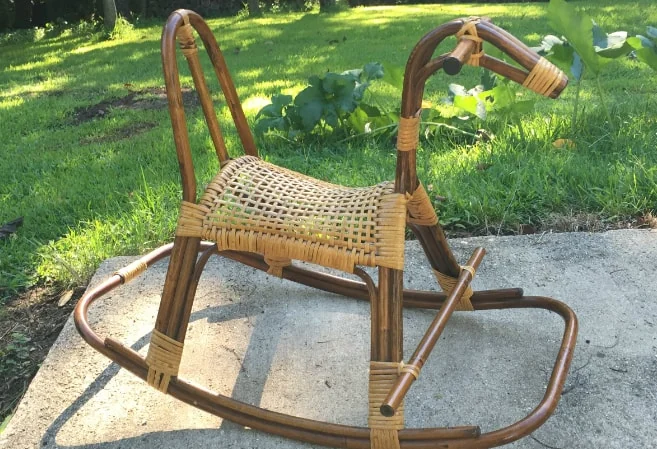
The little rocking horse
Between the high loop at the back and the narrow wooden neck sits a small cane saddle. Its open pattern leaves the curves of the frame visible. Even on this scale, the finished edge matters. A neat band traces the saddle all the way round.
Hand caning
A closer look at hand cane
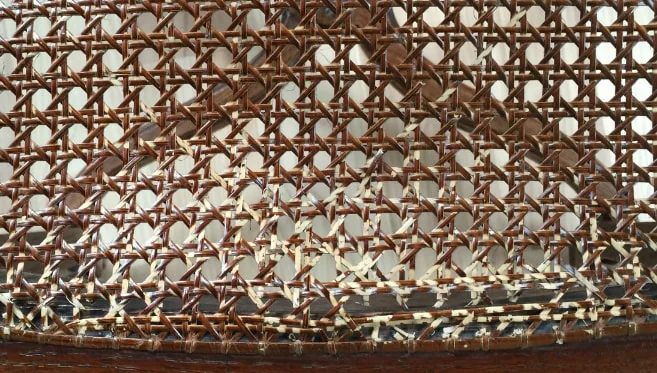
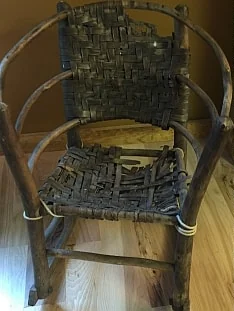
A break in one strip can interrupt several openings in the weave. The damaged sample shows how those breaks accumulate. In the finished seat, follow a diagonal strand across the vertical and horizontal runs to see how the familiar open pattern takes shape.